By Missy Richeal, Founder & CEO, Leverage Marketing
What Skills Make Great Employees?
A strong résumé can help someone get an interview. But after years of interviewing, hiring, managing, and developing people, I’ve learned that many of the skills that make great employees aren’t the easiest to capture on paper.
The people who tend to stand out are the ones who:
- Communicate clearly and listen well.
- Take accountability for their work.
- Stay curious and are willing to learn.
- Collaborate with people who think differently than they do.
- Show initiative instead of waiting to be told every next step.
- Adapt when the plan changes.
- Accept feedback without letting it derail them.
- Think beyond the immediate task and begin anticipating what comes next.
Those skills matter whether you’re interviewing for your first internship or leading a company.
And recently, I had another opportunity to see many of them taking shape in some pretty impressive high school students.
What I Keep Learning at Careerline Tech Center
Over the past year, I’ve had several opportunities to spend time with students in the Entrepreneurship & Global Business program at Careerline Tech Center.
My SCORE mentor, Ken Brune, originally invited me to get involved, and I now serve on the program’s advisory board. It’s become a commitment that gives me just as much as I hope I’m giving back!
Careerline’s Entrepreneurship & Global Business program isn’t just teaching students about business from a textbook. Students get opportunities to explore entrepreneurship, marketing, finance, human resources, leadership, and other aspects of running a company through hands-on learning.
Their classrooms essentially become student-run companies. Students work in functional departments, develop business plans and products, conduct market research, participate in competitions, and learn what it means to contribute to an organization. This kind of experience is so important for students because real work is rarely as neat as a job description.
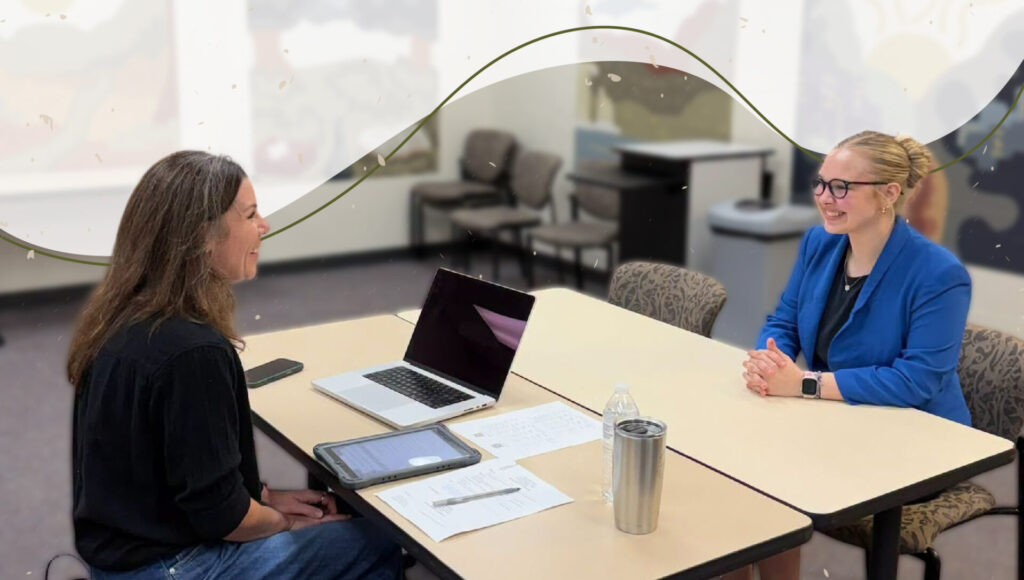
During my most recent visit, students were preparing to interview for positions within their Virtual Enterprises International companies. I spent the day conducting practice interviews and asking many of the same kinds of questions I would ask someone interviewing at Leverage.
We talked about leadership, accountability, creativity, collaboration, work experience, and five-year goals. We talked about the type of manager they hope to work for, where they see their strengths, and what they’ve learned when things haven’t gone according to plan.
I always leave impressed.
The Résumé Only Tells Part of the Story
When I’m interviewing someone for Leverage, I look at experience, technical ability, and education, which can matter depending on the role. But those qualities don’t tell me everything I need to know about a candidate.
I’m also paying attention to how someone thinks.
- Can they explain why they made a decision?
- Do they ask good questions?
- Can they talk honestly about something that didn’t go well?
- How do they describe working with someone who wasn’t pulling their weight?
- Do they take ownership, or does everything seem to happen to them?
I’m listening for self-awareness and watching how they communicate.
I’m also looking for a trait that’s essential on a small agency team:
Can this person anticipate what comes next?
- When they’re sitting in a client meeting, what information will the account manager need afterward?
- Are they noticing something isn’t working, and can they bring forward a possible solution?
- If another team member is overloaded, can they see where you might be able to help?
- Can they recognize the next step without always waiting for someone else to assign it?
You don’t learn all of that by memorizing the right interview answers. You learn it by doing.
The Skills Employers Need Are Still Very Human
There’s understandably a lot of conversation around AI, technology, and how quickly the workplace is changing. Everyone on our team at Leverage is learning new tools and figuring out how AI fits into our work. But technology is only part of the picture.
The National Association of Colleges and Employers identifies eight career-readiness competencies, including communication, critical thinking, leadership, professionalism, teamwork, equity and inclusion, technology, and career and self-development.
The World Economic Forum’s Future of Jobs Report 2025 tells a similar story. Seven out of ten employers surveyed consider analytical thinking an essential skill, more than any other. Resilience, flexibility, leadership, creative thinking, curiosity, and lifelong learning also rank near the top.
I can teach someone a platform. They can learn new software. The software will probably change anyway. It’s much harder to teach someone to be curious if they don’t want to learn, to be accountable if they don’t want to take ownership, or to be collaborative if they aren’t interested in being part of a team. Those are the skills and qualities I notice when I’m hiring, and they’re also woven into the culture we’ve intentionally built at Leverage.
What Those Skills Look Like at Leverage
At Leverage, we’ve put our own language around many of these qualities. We didn’t choose them because they sounded good on a wall. They’re expectations for how we show up for our clients and for each other.
Curiosity Fuels Everything
I don’t expect someone to walk through our door knowing everything. I do expect them to want to know more. Ask the question. Dig deeper. Try the new tool. Find out why something worked or why it didn’t. Curiosity is one of the biggest indicators I’ve found that someone will keep growing.
Clarity & Candor
Being a good communicator doesn’t mean always saying the easy thing. It means having kind, direct conversations. Ask for clarification. Share an opinion. Receive feedback. Admit when you don’t understand something.
At Leverage, we believe clear is kind, and confusion is the enemy of good work.
Responsibility & Loyalty
Own your work, your words, and your mistakes, too. Accountability isn’t about never getting something wrong. It’s about what you do next.
Some of the most impressive answers I’ve heard from Careerline students weren’t stories about getting everything right. They were stories about recognizing a problem and taking responsibility for fixing it.
Anticipate, Don’t React
You’ve heard me mention this one already, and that’s because it matters most on a small team.
Don’t just ask: “What am I supposed to do?”
Start learning to ask: “What will probably be needed next?”
That might mean taking better notes because you know someone will need them after a meeting. It could mean spotting a gap before it becomes a problem. It could mean thinking about what a client will ask before they ask it.
That ability to think two steps ahead is incredibly valuable, and you can develop it at any age.
Excellence Over Perfection
I want people to care deeply about doing good work. I don’t want them so afraid of making a mistake that they’re afraid to try. We tell our team that Leverage should be a safe place to fail. Try something. Learn from it. Accept the feedback. Make it better. Keep moving.
That’s especially important for young professionals. You don’t build confidence by never failing. You build it by discovering that you can make a mistake, learn something from it, and bounce back.
Real Relationships
Business is still about people. No matter how much technology changes, there is enormous value in knowing how to listen, connect, collaborate, build trust, and genuinely care about the person sitting across from you. That’s true with a client and with a coworker, and it’s also true when you’re sitting across the table from a high school student during a practice interview, taking their ideas seriously.
Advice I Give Students About Their First Jobs
One of the things I enjoy most about talking with high school and college students is reminding them that they don’t need to have their entire careers mapped out yet.
Some of the Careerline students I’ve met already have businesses. Some know exactly what they want to study. Some have very clear ideas about the careers they’d like to pursue. Others are still figuring it out. That’s okay. In fact, learning what you don’t want can be just as valuable as discovering what you do.
I often share my own 80/20 rule about work: If you genuinely enjoy about 80% of what you do, you’re probably doing pretty well.
The other 20%?
Some of it is going to be tedious, some will be stressful, and some tasks are going to suck. That’s true even when you own the company.
A fulfilling career doesn’t mean loving every responsibility on your task list. It means finding work where enough of it challenges you, interests you, and feels meaningful that the difficult parts are worth doing.
That’s why young people need chances to experience real workplaces before deciding on their futures.
Great Employees Are Built, Not Found
Every time I leave Careerline, I’m reminded that the skills that shape great employees don’t appear the day someone gets hired. They’re built over time, in classrooms run like companies, in practice interviews, and in first jobs where someone learns it’s okay to ask questions and make mistakes. A résumé can’t capture most of that.
So those of us who hire have a part to play long before an application lands in our inbox. That might mean saying yes to a practice interview day, joining a program’s advisory board, or inviting a group of students into your office to see how the work really gets done. It doesn’t take much. The next generation of great employees is already sitting in West Michigan classrooms, and the sooner we show up for them, the more ready they’ll be to show up for us.
Frequently Asked Questions
What skills make a great employee?
The technical skills required depend on the position, but strong employees often share qualities that apply across industries. These include communication, critical thinking, accountability, curiosity, professionalism, collaboration, adaptability, initiative, and a willingness to continue learning.
Why are soft skills important when hiring?
Skills such as communication, teamwork, emotional intelligence, adaptability, and problem-solving affect how well someone can apply their technical knowledge in a real workplace. They influence how employees communicate with clients and coworkers, handle feedback, respond to problems, and contribute to a team.
Can employers teach soft skills?
Some interpersonal and professional skills can absolutely be developed through practice, feedback, mentorship, and experience. Opportunities such as internships, job shadowing, practice interviews, team projects, and work-based learning give young people opportunities to build those skills before entering the workforce full-time.
What is Careerline Tech Center?
Careerline Tech Center is a career and technical education center in Holland, Michigan, operated as part of Ottawa Area Intermediate School District. Careerline offers hands-on career and technical education programs that allow high school students to explore industries, develop practical skills, and prepare for education and employment after graduation.
What is the Entrepreneurship & Global Business program at Careerline Tech Center?
Careerline’s Entrepreneurship & Global Business program provides students with hands-on exposure to areas of business, including entrepreneurship, marketing, finance, human resources, and management. Students have opportunities to apply what they’re learning through projects and real-world business experiences.
What is Virtual Enterprises International?
Virtual Enterprises International is an experiential learning program that transforms classrooms into student-run companies. Students take on functional roles in areas such as marketing, finance, sales, human resources, and administration while developing business plans, products, and other real-world deliverables.
Interested in Leverage?
We believe good careers are built through curiosity, experience, mentorship, and opportunities to keep learning. If you’re a student or emerging professional interested in marketing, design, web development, strategy, or client service, reach out to us and ask about future internship or employment opportunities.